
WSKF Perth
Grant Rollinson – Principal Instructor
Black Belt Instructors – 3rd Dan and above
Black Belt Instructors – 1st and 2nd Dan
Enquire here
 WSKF Australia
Classes and trial availability vary by club. Ring the club or send an enquiry to check.
06Personal benefits · In the mind
In Shotokan karate you learn to defend yourself, but karate is not about aggression. Students are taught that self-defence should only be used if necessary, and that the aim is to resolve conflict without it becoming physical.
01The order matters
Shotokan karate focuses on discipline and respect, with no emphasis on violence. Self-defence is taught, but it comes last.
Students are taught to respect their training partners, their instructor, their opponents and themselves.
Karate is not about aggression. The aim is to resolve conflict without it becoming physical.
Students learn to defend themselves, and are taught that self-defence should only be used if necessary. Only if necessary
02In class
Defence is practised within Shotokan training itself: in kata, in kumite and in the control students learn.
Set patterns of movement that practise defending against opponents coming from several directions.
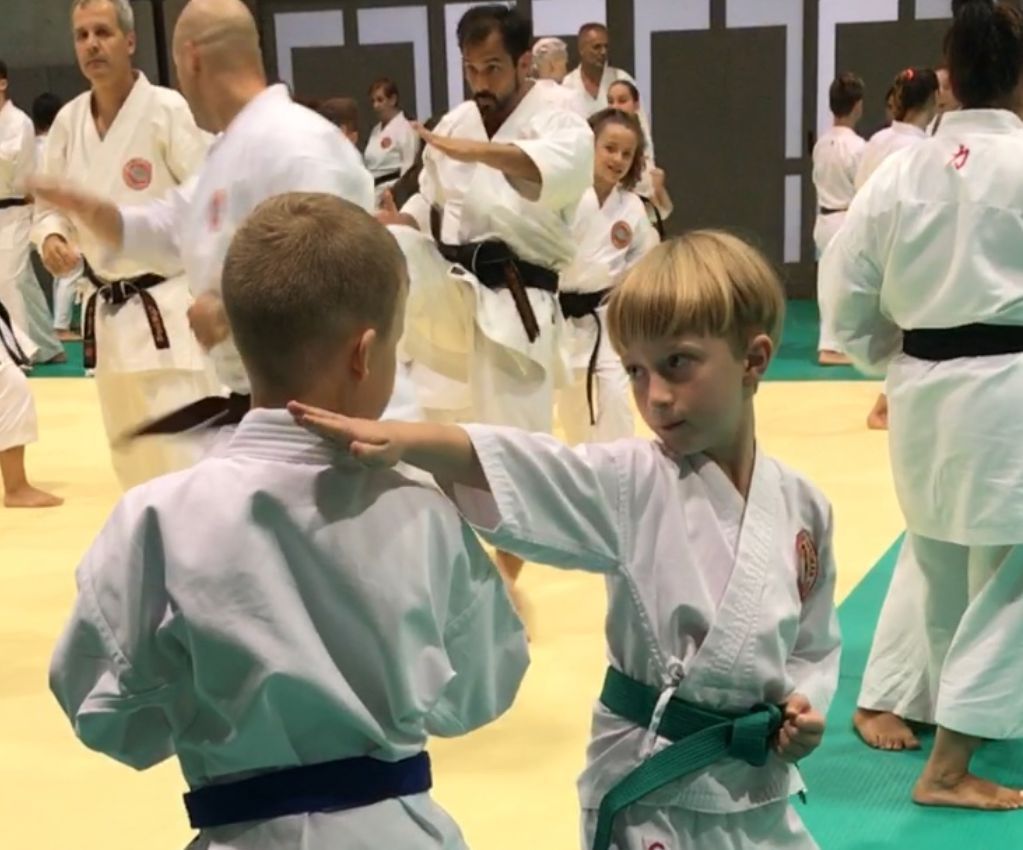
Sparring with a fellow club member, always practised with control.
Students learn to move at high speed and full power without hurting the person in front of them. That is self control, one of the eight principles.
Karate is not about aggression. Students are taught respect for each other and for themselves, and that self-defence should only be used if necessary.
No. Every technique is taught step by step, with one-to-one help when you need it.
Yes. Kumite, sparring with a fellow club member, is one of the three parts of Shotokan training, and it is always practised with control.
04Enquire
Tell us who is training and where, and the club will confirm a suitable class.
Self defence
WSKF Assistant
Demo mode
Demo assistant. Enquiries are prepared here, never sent.
Contact the club for current training times.
Enquire hereContact the club for current training times.
Enquire hereContact the club for current training times.
Enquire hereContact the club for current training times.
Enquire hereContact the club for current training times.
Enquire hereContact the club for current training times.
Enquire here